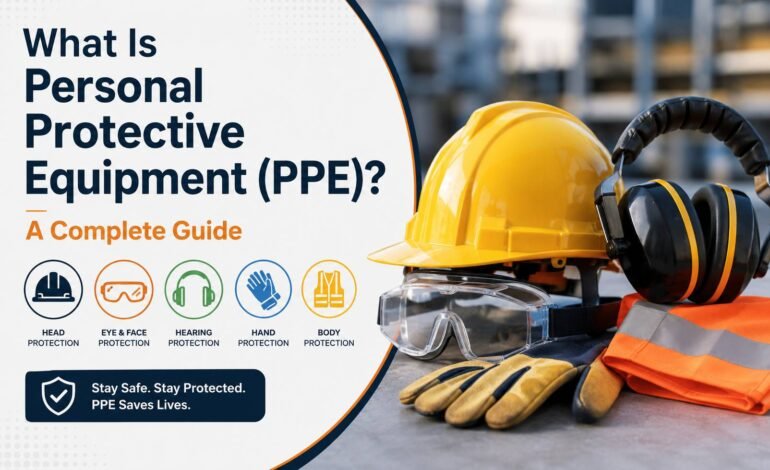
What Is Personal Protective Equipment (PPE)? A Complete Guide

Personal Protective Equipment (PPE) is one of the most important components of workplace safety in the UAE. Whether you work in construction, manufacturing, or logistics, PPE helps protect you from serious injuries. This guide covers everything you need to know about PPE — from its types and standards to maintenance and best practices.
Table of Contents
ToggleWhat Is Personal Protective Equipment (PPE)?
Personal Protective Equipment, commonly known as PPE, refers to any clothing, gear, or device worn by a worker to minimize exposure to workplace hazards. These hazards can be physical, chemical, biological, electrical, or ergonomic in nature.
PPE serves as the final layer of protection, helping safeguard workers from workplace hazards and injuries. It does not eliminate hazards — but it significantly reduces the risk of injury when other safety measures are already in place.
Common examples of PPE include hard hats, safety goggles, hand gloves, respirators, high-visibility vests, and steel-toe boots.
Why Is PPE (Personal Protective Equipment) Important?
PPE plays a critical role in protecting workers across all industries. Here is why it matters:
- Prevents Workplace Injuries — PPE reduces the risk of burns, falls, chemical exposure, and other common workplace accidents.
- Saves Lives — In high-risk environments such as construction sites, factories, and chemical plants, proper PPE can be the difference between life and death.
- Legal Requirement — In most countries, employers are legally required to provide proper PPE to their workers free of charge. Failure to do so can result in heavy fines and legal penalties.
- Reduces Health Costs — Workplace injuries are expensive. Proper PPE reduces medical costs, lost workdays, and compensation claims for both employers and employees.
- Builds a Safety Culture — When workers consistently use PPE, it creates a positive workplace safety culture that benefits everyone.
Different Types of PPE (Personal Protective Equipment) UAE
There are several categories of PPE UAE, each designed to protect a specific part of the body.
Head Protection
Head injuries are among the most serious workplace injuries. Head protection includes:
- Hard Hats — Protect against falling objects, bumps, and electrical hazards
- Bump Caps — Lightweight protection for low-risk environments
- Welding Helmets — Protect the face and head during welding operations
Who needs it: Construction workers, miners, electricians, warehouse staff
Key Standards: ANSI/ISEA Z89.1 (USA), EN 397 (Europe)
Eye Protection
Eyes are extremely vulnerable to workplace hazards. Eye protection equipment includes:
- Safety Glasses — Basic protection from dust and UV rays
- Safety Goggles — Sealed protection from chemicals and fine particles
- Face Shields — Full-face protection for grinding, welding, or chemical work
- Welding Goggles — Specialized protection from intense light and sparks
Who needs it: Lab workers, welders, construction workers, healthcare professionals
Key Standards: ANSI Z87.1 (USA), EN 166 (Europe)
Hearing Protection
Prolonged noise exposure causes permanent hearing damage. Hearing protection includes:
- Disposable Earplugs — Affordable and easy to use in high-noise environments
- Reusable Earplugs — More durable and cost-effective for daily use
- Earmuffs — Cover the entire ear for maximum noise reduction
- Noise-Cancelling Headsets — Used in very high-noise or communication-heavy environments
Who needs it: Factory workers, construction crews, airport staff, musicians
Key Standards: ANSI S3.19, EN 352
Respiratory Protection
Breathing in hazardous substances can cause long-term lung damage or death. Respiratory PPE includes:
- Disposable Dust Masks (N95/FFP2) — Basic protection from dust and airborne particles
- Half-Face Respirators — Cover the nose and mouth with replaceable filters
- Full-Face Respirators — Complete face and respiratory protection
- Powered Air-Purifying Respirators (PAPR) — Motorized units for high-risk environments
- Self-Contained Breathing Apparatus (SCBA) — Used in firefighting and chemical emergencies
Who needs it: Painters, welders, healthcare workers, chemical plant workers, miners
Key Standards: NIOSH (USA), EN 149 (Europe)
Hand Protection
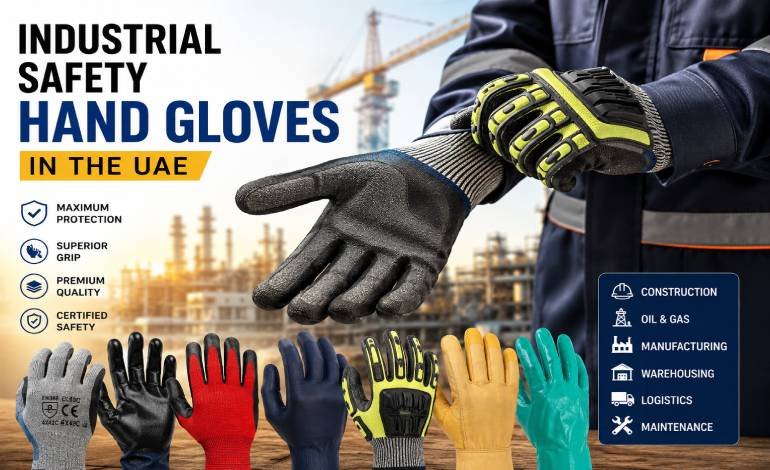
Hands are the most commonly injured body part in the workplace. Hand protection includes:
- Cut-Resistant Gloves — Protect against sharp tools and materials
- Chemical-Resistant Gloves — Made from nitrile, latex, or neoprene for chemical handling
- Heat-Resistant Gloves — For welding, cooking, and high-temperature work
- Electrical Insulation Gloves — Protect electricians from electrical shock
- Disposable Gloves — Used in food handling and medical settings
Who needs it: Electricians, welders, lab workers, medical staff, construction workers
Key Standards: EN 388 (cut resistance), EN 374 (chemical resistance)
Foot Protection
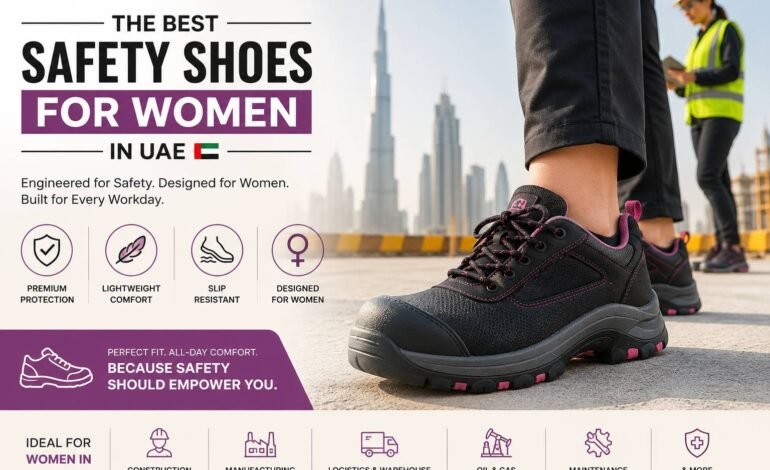
Foot injuries from heavy falling objects and slippery surfaces are very common. Foot protection includes:
- Steel Toe Boots — Protect against heavy falling objects
- Composite Toe Shoes — Lightweight, non-metallic alternative to steel toe
- Slip-Resistant Shoes — Designed for oily or wet floor surfaces
- Electrical Hazard (EH) Boots — Provide protection against electrical shock
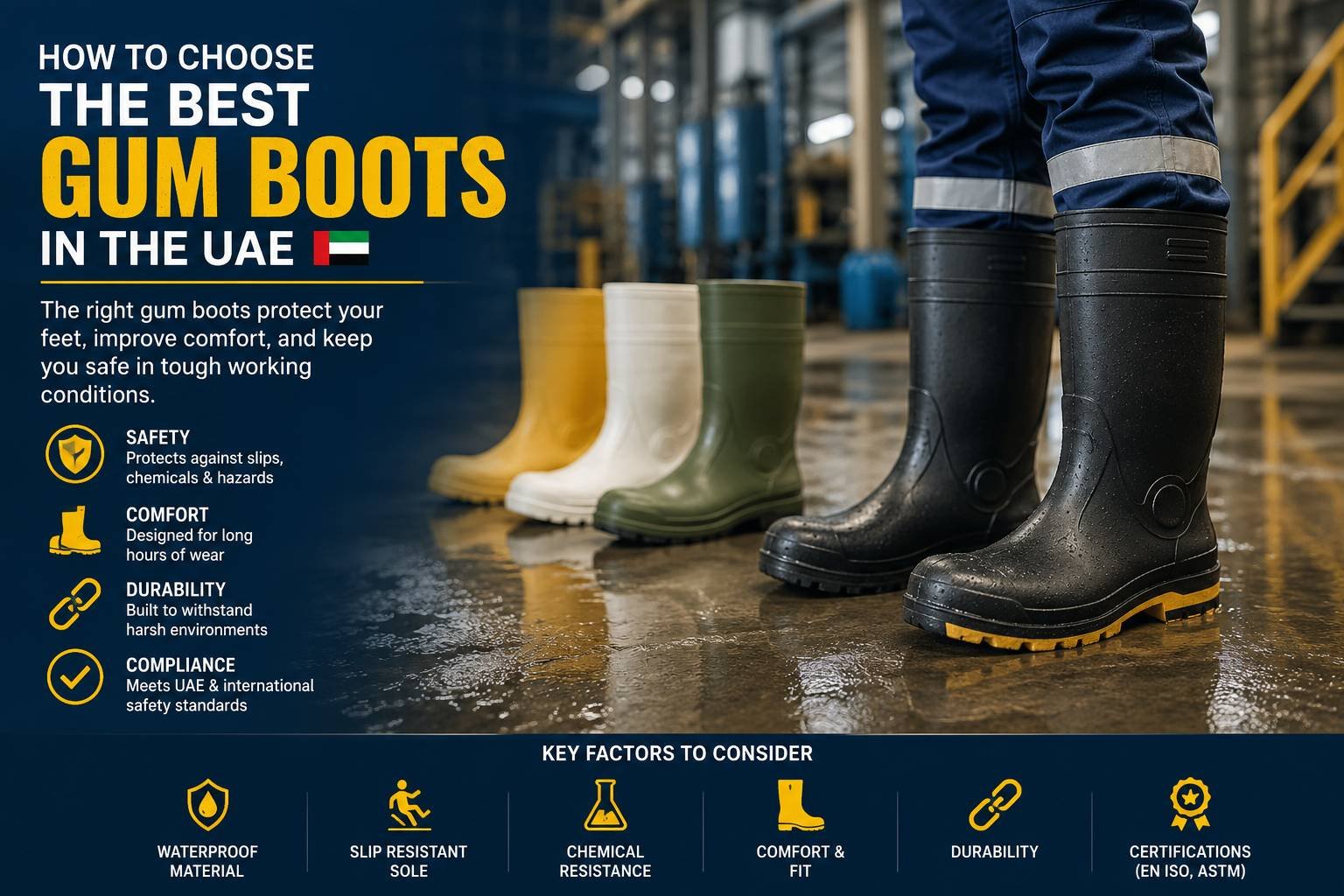
- Waterproof Safety Boots — For outdoor and wet environments
Who needs it: Construction workers, warehouse staff, factory workers, delivery personnel
Key Standards: ASTM F2413 (USA), EN ISO 20345 (Europe)
Body Protection
Body PPE protects the torso and full body from various risks:
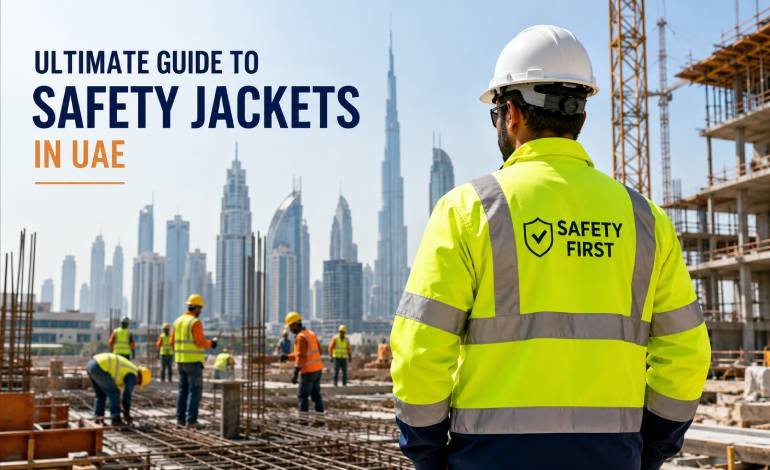
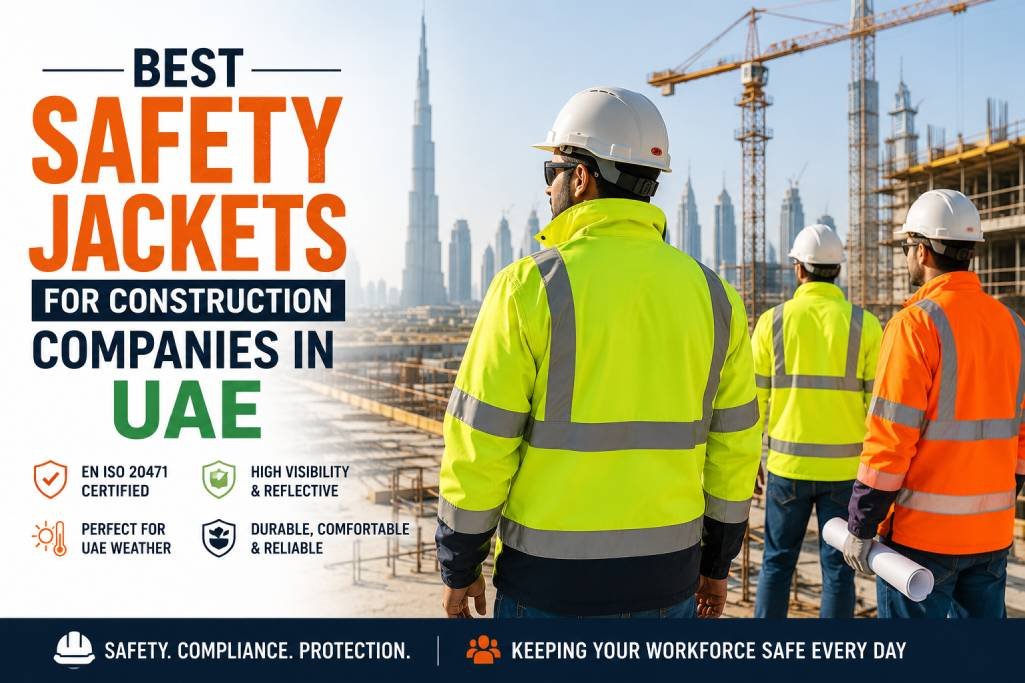
- High-Visibility (Hi-Vis) Vests — For workers near traffic or moving machinery
- Coveralls — Full-body protection from dust, chemicals, and contamination
- Chemical Protective Suits — Designed to handle hazardous chemical risks
- Flame-Resistant (FR) Clothing — Protects against fire and arc flash
- Bulletproof / Stab-Resistant Vests — For security and law enforcement personnel
- Safety Harnesses — Fall protection for workers operating at height
Who needs it: Road workers, factory employees, chemical handlers, firefighters, construction workers
Key Standards: EN ISO 20471 (hi-vis), NFPA 70E (arc flash), EN 340 (coveralls)
PPE (Personal Protective Equipment) Standards and Regulations
PPE must meet recognized safety standards to be effective. The main standards by region include:
| Region | Standard Body | Examples |
| USA | OSHA, ANSI, NIOSH | OSHA 29 CFR 1910.132, ANSI Z87.1 |
| Europe | CE Marking, EN Standards | EN 397, EN 166, EN ISO 20345 |
| UAE / Middle East | OSHAD, OSHA Alignment | UAE Federal Law No. 8 of 1980 |
| International | ISO | ISO 45001 (Occupational Health & Safety) |
Key Points:
- All PPE must be CE marked (Europe) or ANSI/NIOSH certified (USA)
- PPE must be appropriate for the specific hazard — one size does not fit all
- Workers must be trained on how to correctly use and maintain their PPE
How to Choose the Right PPE (Personal Protective Equipment) in UAE
Selecting the correct PPE requires a systematic approach. Follow these steps:
- Identify the Hazard — Conduct a thorough workplace hazard assessment. Identify physical, chemical, biological, and ergonomic risks.
- Match PPE to the Hazard — Select PPE that is specifically designed for the hazard identified. For example, use chemical-resistant gloves when handling corrosive substances.
- Check Certifications — Always choose PPE that meets recognized safety standards such as ANSI, CE, EN, or ISO certifications.
- Ensure Proper Fit — PPE that does not fit correctly will not protect properly. Ill-fitting equipment can also create additional hazards, such as loose gloves getting caught in machinery.
- Consider Comfort — Workers are more likely to consistently wear PPE that is comfortable. Lightweight, breathable options improve compliance rates.
- Train Workers — Even the best PPE is ineffective if workers do not know how to wear it correctly. Always provide proper training before introducing new PPE.
PPE (Personal Protective Equipment) Maintenance and Inspection
Regular maintenance is essential to ensure PPE continues to provide effective protection.
Before Use:
- Inspect for cracks, holes, or signs of damage
- Check straps, buckles, and fasteners for wear
- Ensure filters and cartridges are not expired
Cleaning and Storage:
- Clean PPE according to the manufacturer’s instructions
- Store in a clean, dry place away from direct sunlight
- Never store PPE near items that could cause damage such as chemicals or sharp objects
Replacement Schedule:
- Replace PPE immediately if it is damaged, expired, or no longer effective
- Disposable PPE such as N95 masks and single-use gloves must never be reused
Record Keeping:
- Maintain records of PPE inspections, replacements, and training sessions
Common PPE (Personal Protective Equipment) Mistakes
Even when PPE is available, workers sometimes make mistakes that reduce its effectiveness:
- Not Wearing PPE at All — Some workers skip PPE because it feels inconvenient. This is the most dangerous mistake of all.
- Wearing the Wrong PPE — Using PPE not designed for the specific hazard provides a false sense of security. Always match PPE to the hazard.
- Incorrect Fit — PPE that does not fit properly will not provide adequate protection. Always select the correct size.
- Using Damaged PPE — Cracked hard hats, torn gloves, and scratched goggles all reduce protection. Damaged PPE should be replaced immediately.
- Not Replacing Expired PPE — Respirator filters, safety helmets, and safety harnesses all have expiry dates. Using expired PPE is as dangerous as using no PPE at all.
- Removing PPE in Hazardous Areas — Some workers temporarily remove PPE while still in the work zone. Even a few seconds of exposure can cause serious injury.
PPE (Personal Protective Equipment) Requirements by Industry
Different industries have different PPE requirements. Here is a quick overview:
| Industry | Required PPE |
| Construction | Hard hat, safety boots, hi-vis vest, gloves, safety harness |
| Healthcare | Gloves, surgical mask/respirator, gown, eye shield |
| Manufacturing | Safety glasses, hand gloves, hearing protection, steel toe boots |
| Chemical / Oil & Gas | Chemical suit, respirator, face shield, chemical-resistant gloves |
| Welding | Welding helmet, FR clothing, gloves, safety boots |
| Electrical Work | Insulated gloves, arc flash suit, safety boots, face shield |
| Warehousing / Logistics | Hi-vis vest, safety boots, cut-resistant gloves |
| Food Processing | Gloves, hairnet, apron, slip-resistant shoes |
Always conduct a site-specific hazard assessment to identify any additional PPE requirements beyond the general guidelines above.
PPE (Personal Protective Equipment) Workplace Benefits
Investing in quality PPE delivers major advantages for both workers and employers:
For Workers:
- Reduced risk of workplace injuries
- Longer, healthier careers
- Protection against long-term occupational diseases
For Employers:
- Fewer workplace accidents and compensation claims
- Improved compliance with health and safety regulations
- Higher worker productivity and morale
- Stronger company reputation for safety
Studies consistently show that companies with strong PPE programs significantly reduce the rate of workplace accidents and associated costs.
Frequently Asked Questions
Q: Who is responsible for providing PPE?
In most countries, the employer is legally responsible for providing proper PPE free of charge to all workers who require it.
Q: Can workers refuse to wear PPE?
Employers can enforce PPE use as a condition of employment. Workers who refuse to wear required PPE may face disciplinary action.
Q: How often should PPE be replaced?
Replacement frequency depends on the type of PPE, frequency of use, and manufacturer guidelines. Damaged or expired PPE must be replaced immediately regardless of age.
Q: Is PPE the only safety measure needed?
No. PPE is the last line of defense. Other controls such as engineering solutions and administrative measures should be implemented first.
Q: What is the difference between PPE and RPE?
RPE stands for Respiratory Protective Equipment — it is a subset of PPE specifically designed to protect the lungs and airways from airborne hazards.
Q: Can one PPE item protect against multiple hazards?
Some PPE is designed for multiple hazards — for example, multi-hazard coveralls or combination safety boots. Always verify that the PPE is certified for each specific hazard it is expected to cover.
Conclusion
Personal Protective Equipment is an essential component of any workplace safety program. From hard hats and safety boots to respirators and chemical suits, the right PPE protects workers from serious injuries, long-term health problems, and even death.
Choosing the correct PPE, ensuring a proper fit, maintaining it regularly, and training workers to use it correctly are all essential steps toward creating a safer workplace.
At Informative Workwears, we are committed to helping workers and organizations make informed decisions about PPE, safety clothing, and industrial workwear. Explore our guides to find the best safety solutions for your workplace.
Related Posts:

Ali Hassan is the founder of Informative Workwears and specializes in workwear, PPE, safety footwear, protective clothing, and workplace safety. He researches safety equipment, industry standards, and protective gear to create practical guides and product reviews that help workers and employers make informed safety decisions.