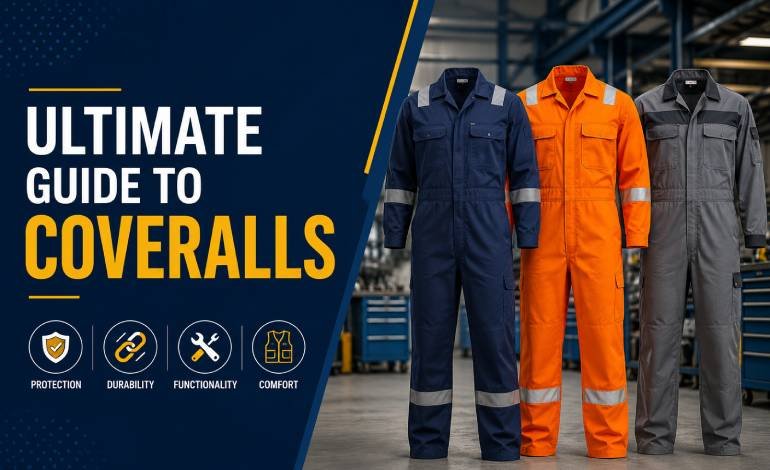
Ultimate Guide to Coveralls

Coveralls are one of the most important parts of modern workplaces. If you work in any of the following industries: construction, manufacturing, automotive workshops, healthcare, or oil & gas industries, the right coveralls provide you with the benefits of safety, comfort, and productivity.
In this complete guide, we will cover everything you need to know about coveralls, including their types, fabrics, industries, safety features, buying guide, and maintenance tips so you can choose the best option for your needs.
What Are Coveralls?
Coveralls are one-piece protective garments designed to give full-body protection from workplace risks such as dust, chemicals and heat. Coveralls are usually used as part of Personal Protective Equipment (PPE) across different industries.
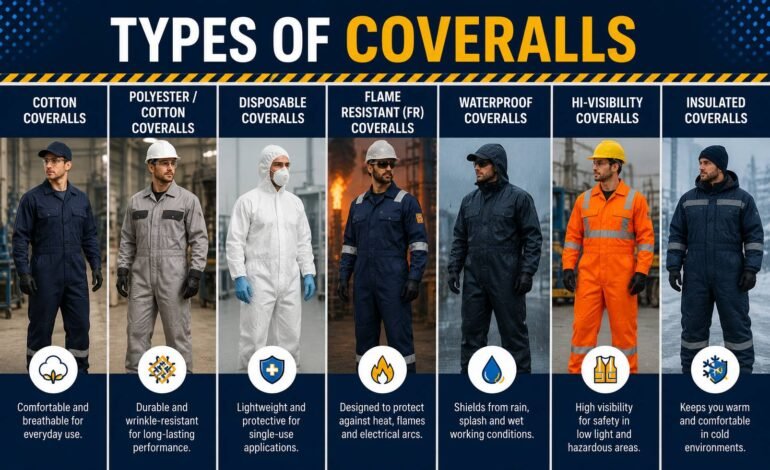
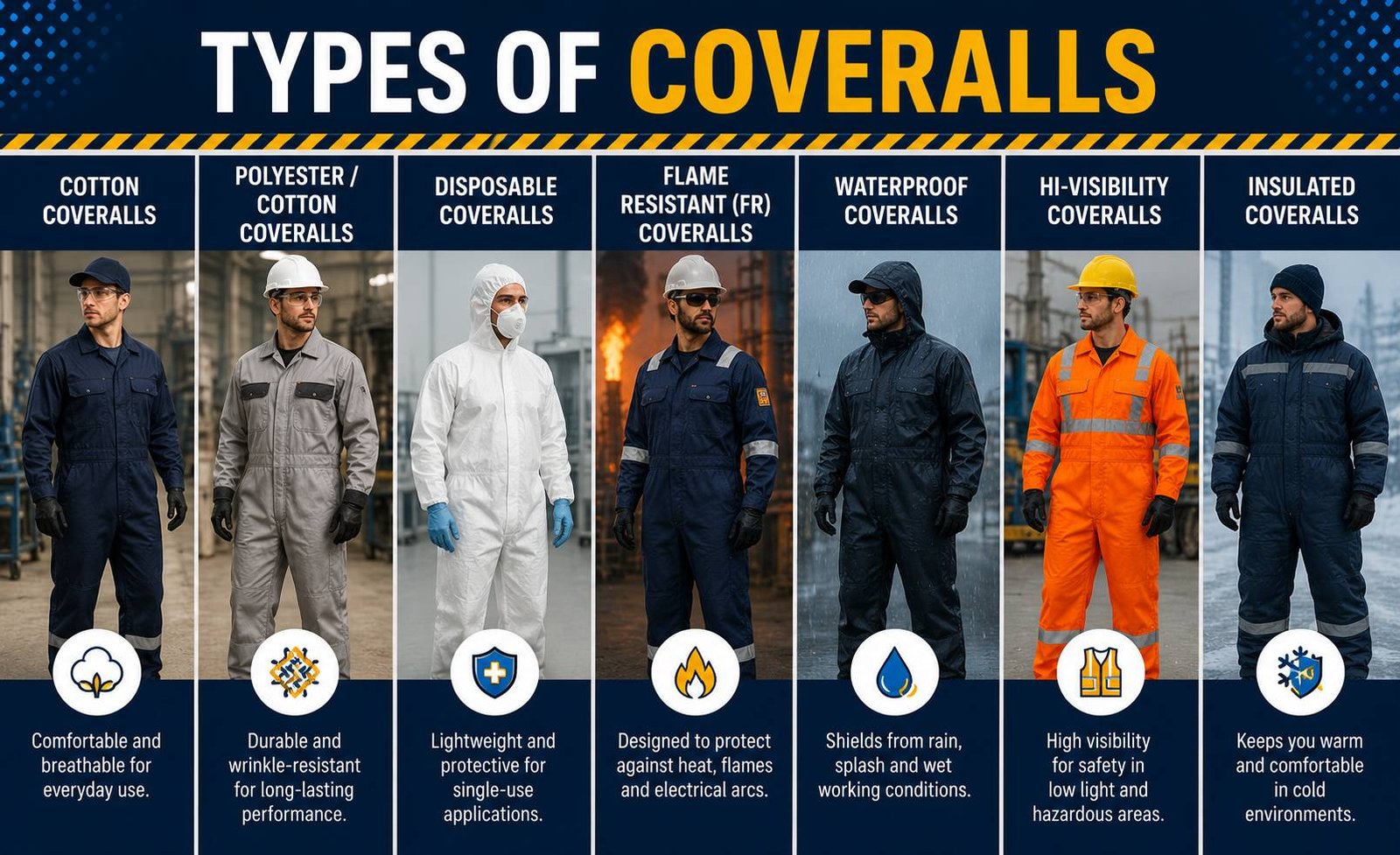
Types of Coveralls
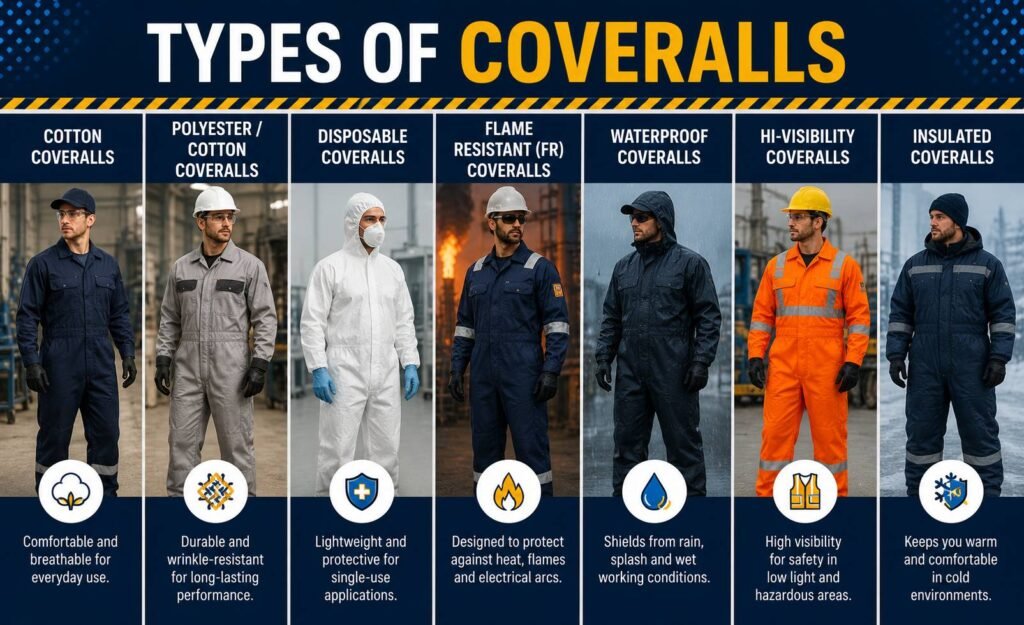
Various work environments need different types of coveralls. Below are the most common types used in industries worldwide.
1. Disposable Coveralls
Disposable coveralls are lightweight, single-use garments designed for temporary protection against dirt, dust, and contaminants.
Best For
- Painting
- Cleaning
- Healthcare
- Chemical handling
- Dusty environments
Advantages
- Affordable
- Lightweight
- Hygienic
- Easy to dispose of
Limitations:
- Not reusable
- Limited durability
2. Reusable Coveralls
Reusable coveralls are manufacture from durable materials and can withstand multiple washes while maintaining protection and comfort.
Best For
- Construction
- Manufacturing
- Mechanical workshops
- Oil & gas industry
Advantages
- Long-lasting
- Cost-effective
Better durability
3. Flame-Resistant (FR) Coveralls
FR coveralls are especially designed to protect workers from fire, heat, and arc flash risks.
Common Industries
- Welding
- Electrical work
- Oil refineries
- Petrochemical plants
Features:
- Heat resistance
- Arc flash protection
- Self-extinguishing fabric technology
4. Waterproof Coveralls
Waterproof coveralls are designed to keep workers dry in wet or rainy atmospheres.
Suitable For
- Agriculture
- Fishing industry
- Outdoor construction
- Cleaning services
Benefits
- Water resistance
- Comfortable outdoor protection
- Durable in harsh weather
5. High-Visibility Coveralls
High-visibility coveralls include reflective strips and bright colors to improve worker visibility in low-light conditions.
Common Colors
- Neon yellow
- Orange
- Lime green
Best For
- Road construction
- Traffic control
- Mining
- Airport ground staff
Coverall Fabrics Explained
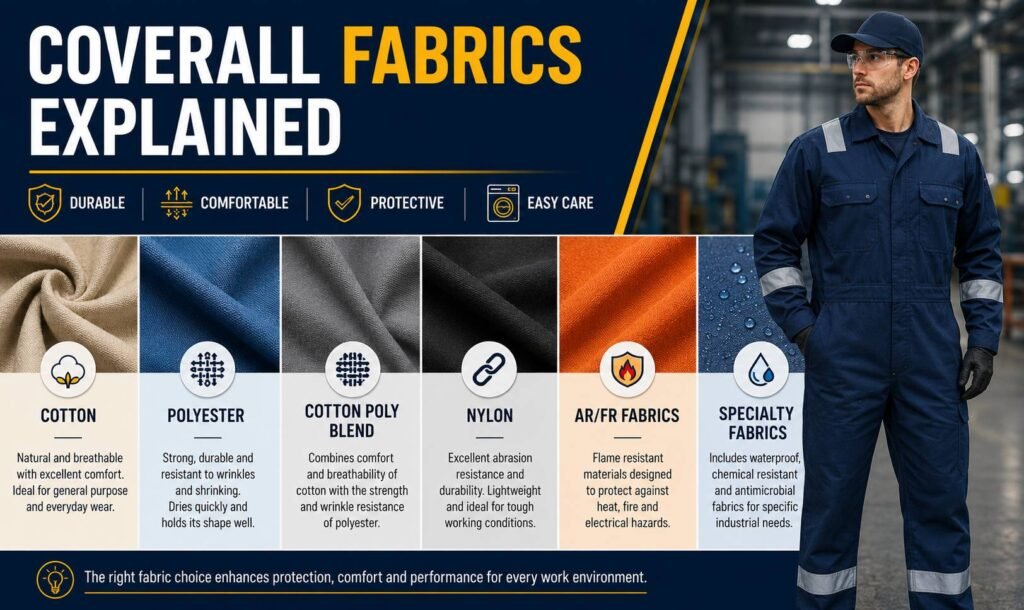
The fabric of a coverall determines its comfort, durability, breathability, and level of protection.
Cotton Coveralls
Cotton is one of the most commonly used materials for workwear due to its comfort and breathability.
Pros
- Soft and comfortable
- Breathable
- Ideal for hot weather
Cons
- Limited water resistance
Less durable in harsh environments
Polyester/Cotton Blend
Polyester-cotton blends combine comfort with enhanced durability.
Benefits
- Wrinkle-resistant
- Stronger than pure cotton
- Longer lifespan
Nomex Fabric
Nomex is a premium flame-resistant material used in high-risk industries.
Best For
- Firefighters
- Electrical workers
- Oil & gas professionals
Key Advantages
- Excellent heat resistance
- Lightweight
- Long-lasting FR protection
Tyvek Fabric
Tyvek is a lightweight copied material designed for chemical and particle protection.
Common Applications
- Laboratories
- Pharmaceuticals
- Hazardous environments
PVC-Coated Fabrics
PVC-coated fabrics provide outstanding waterproof and chemical-resistant protection.
Ideal For:
- Industrial cleaning
- Wet environments
- Chemical handling
Industries That Use Coveralls
Coveralls are extensively used across industries where worker safety and hygiene are significant.
Construction Industry
Construction workers want durable coveralls to protect against dust, debris, and physical risks.
Required Features:
- High visibility
- Strong stitching
- Abrasion resistance
Oil & Gas Industry
This is a high-risk industry where flame-resistant coveralls are frequently required.
Important Features:
- FR protection
- Chemical resistance
- Anti-static properties
Automotive Industry
Mechanics and technicians wear coveralls to protect against grease, oil, and sparks.
Preferred Materials:
- Cotton blends
- Oil-resistant fabrics
Healthcare & Pharmaceutical
In healthcare environments, contamination control is critical.
Commonly Used:
- Disposable coveralls
- Sterile protective suits
Coveralls Manufacturing Sector
Factories and industrial plants use coveralls for both worker protection and professional uniforms.
Flame Resistance
Protects workers from heat, fire, and arc flash risks.
Chemical Protection
Acts as a barrier against dangerous liquids and harmful substances.
Anti-Static Properties
Helps reduce static electricity discharge in sensitive environments.
Reflective Tape
Enhance visibility during nighttime or low-light work conditions.
Reinforced Stitching
Enhances durability and reduces the risk of tearing.
How to Choose the Right Coveralls
Selecting the right coveralls depends on your work environment and safety requirements.
1. Identify Workplace Hazards
Determine the type of risks involved
- Heat exposure
- Chemicals
- Dust
- Rain
- Electrical Risks
2. Select the Right Fabric
Different fabrics offer different levels of protection and comfort.
| Requirement | Recommended Fabric |
| Hot Weather | Cotton |
| Fire Protection | Nomex / FR Fabric |
| Chemical Protection | Tyvek / PVC |
| Heavy-Duty Work | Poly-Cotton Blend |
3. Ensure Proper Fit
Poorly fitted coveralls can reduce comfort and workplace safety.
The Ideal Fit Should:
- Allow easy movement
- Feel comfortable
- Not be too loose or too tight
4. Check Safety Certifications
Always verify that the coveralls meet relevant industry safety standards and certifications.
5. Consider Weather Conditions
For outdoor work, consider
- Waterproofing
- Breathability
- Thermal insulation
Coverall Maintenance Guide
Proper maintenance increases the lifespan and effectiveness of coveralls.
Washing Tips
Always
- Follow manufacturer instructions
- Use mild detergent
- Wash FR garments separately
Avoid
- Bleach
- Harsh chemicals
- Excessive heat drying
Storage Tips
Store coveralls
- In a dry place
- Away from direct sunlight
- Away from Risks chemicals
Regular Inspection Checklist
Check for
- Tears
- Loose stitching
- Broken zippers
- Thin or damaged fabric
Damaged coveralls should be replaced immediately.
Benefits of Wearing Coveralls
Enhanced Worker Safety
Coveralls reduce exposure to workplace risks and injuries.
Improved Hygiene
They help control dust and dirt.
Professional Appearance
Uniform workwear makes a more professional image.
Long-Term Cost Savings
Reusable coveralls offer better value over time.
Common Mistakes to Avoid
- Choosing the wrong size
- Ignoring industry-specific safety requirements
- Reusing damaged coveralls
- Buying low-quality materials
- Neglecting maintenance
Final Thoughts
Coveralls are much more than just work uniforms, they are an important part of workplace safety and protection. Choosing the right type, fabric, and safety features can significantly enhance worker comfort, productivity, and safety.
Whether you work in construction, manufacturing, healthcare, automotive, or oil & gas, investing in the right coveralls is a good decision for long-term performance and protection.